top of page
Search
  • Writer: Olivia Perovic
    Olivia Perovic
  • Mar 16, 2023
  • 2 min read

This post showcases the project I completed throughout the semester for Computer Applications in Digital Design. Programs used include the Adobe Creative Suite and Google SketchUp. Any photos used within these works that aren't mine were properly cited in APA format within the full versions of the project, and will be linked below their respective sections here.

________________________________________________________________________


Inspiration

As one may see, a theme in the aesthetics I like most often involve nature in some way. With it being the Fall 2021 semester, I was thinking of how aware everyone is of nature during this time – wardrobes have to change, the trees become colorful, warm drinks are a must, et cetera. Autumn was my inspiration for this line and concept, and because of its characteristics found in nature, that’s how it ties into my personal brand.


My target market is for feminine, 25- to 35-year-olds in the USA and in England who love wandering, writing, reading, and being eco-conscious all with a cup of coffee in their hand. They value versatility and product quality a lot, and are willing to invest in a few really nice items they can wear again and again from brands that align with their values. With this in mind, my inspiration was the feeling I experience when I think of that setting: the cobblestone streets, layering outfits, warm drinks, an overcast sky, how lovely nature becomes in the autumn time, these are all very comforting. The dark colors, cozy brushed fabrics and all the patterns I designed are very nature-inspired. The event promoted on my postcard, “Our Roots, Our Home” is an expo showcase of local Chicagoland designers who have sustainable and socially-responsible apparel lines. While pieces are on display, speakers from around the Chicagoland area have small panels around the showroom space talking about various sustainable living topics like organic farming, how to be zero-waste, how to evaluate a retail brand’s CSR (corporate social responsibility), and more. My greatest wish for the fashion industry is to make CSR and sustainable practices a top priority, and to have it be fully accessible to everyone all around the world.


Target Market


Age group: 25-30


Feminine


Location: London, New York, & Oslo


Income: $70,000 - $100,000


Leisure activities: Exploring, reading, & writing.


Shopping habits: buys for the long-run, eco-conscious, practical, versatile.


Image source: VintageCamp


Color Chips

Image source: Mathilde Langevin


Plain Weaves


Twill weaves


Stripes


Plaids


Custom print fabric: 'Linen Vine'


Technical Sketches: Black & White


Technical Sketches: Three Colorways - Sweater


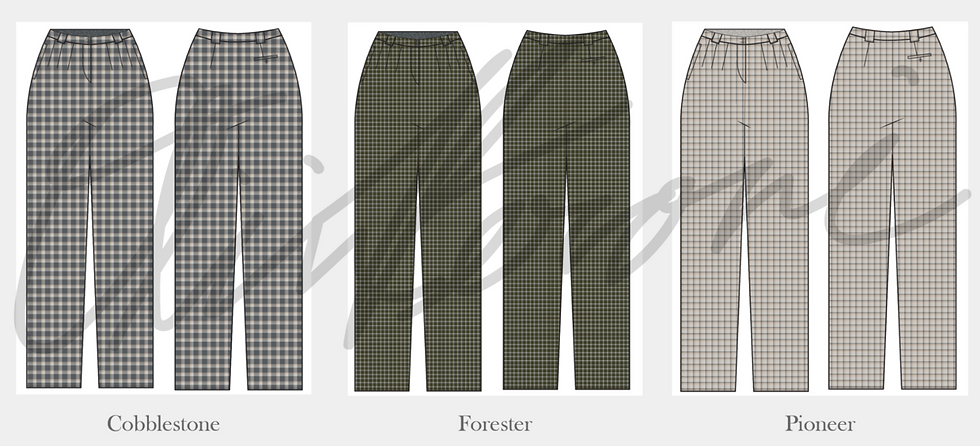
Technical Sketches: Three Colorways - Trousers

Mock Event Promotional Postcard - Front

Image source: Brooke Cagle


- Back

Image source: Andreas Strandman


Mock Cost Sheet (This is based on given, general pricing tables. If I actually had these manufactured, they would be made with ethically-sources materials in regards to both the planet and to people)


Store (Made with Google SketchUp)

- Store Front


- Overview & Main Displays and Cash Registers

Image sources: Andreas Strandman (left) & Prophsee Journals (right)


- Main Displays Alternative Angle & Accessories Table with Smaller Promotion Tables Around It


- Fitting Room Area & Shoe section and try-on area

Image source: PrettyBooks


- Lounge area complete with coffee (perhaps can be a brand deal with a popular coffee shop) and books
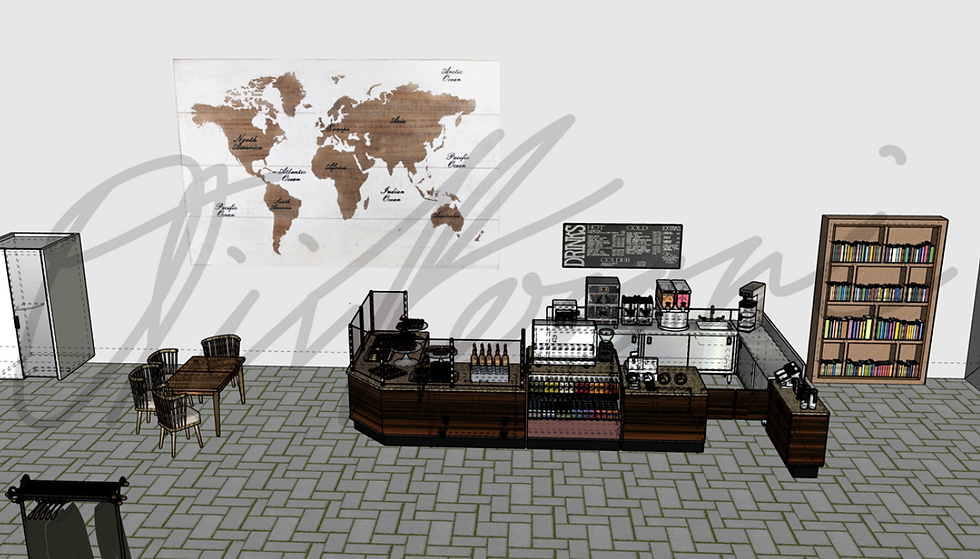
Image source: Gracie Oaks


  • Writer: Olivia Perovic
    Olivia Perovic
  • Apr 24, 2022
  • 6 min read

Updated: Aug 29, 2024


In spring 2022, I had the opportunity to work remotely for Eco-Stylist: The shopping directory that customers can trust and use to shop by their values. Our team carefully evaluates apparel brands to see if they make the cut to be included in our sustainable brand directory, using criteria established by Remake – the international fashion accountability non-profit organization.


My main role was in brand research, which includes scoring various aspects of a company’s operations according to the table below. In a 15 week period, I evaluated 49 brands. I used what is publicly available - like the company's website, LinkedIn profile, and business reports - to determine if the company performs in a way that's satisfactory in: the wages they pay their workers, whether or not they have a publicly-available Code of Conduct that their suppliers must comply with, energy and water usage in operations, how they handle offcuts and fabric waste, whether or not they visit their factories often and if they disclose the audits from those visits, their stance on diversity, their involvement in improving the community they source from, their animal treatment/material policy, whether or not they have a program to extend the life of their products, among many others. The bottom line is that all brands should make it very easy for anyone to look into their practices, and if that's not the case, that's a red flag and may be indicative of an unethical business model. All of these things must be backed up with actual evidence and formal disclosures from the company, otherwise no points were rewarded. If the brand earned a score of 50 or above, that means they have passed and will be included in our directory for customers to shop from!


I completed 200 work hours during one of my spring semesters at Iowa State University. On top of the main duties of the job, I completed a number of projects which I will elaborate on below.


-Seal of Approval Tier System:

Every brand certified by us is either Certified, Silver, or Gold which depends on a brand’s final score when evaluated. Within the old tier system, there was only 1 Gold brand out of about 80 total, a handful of Silver, and the rest were Certified. I put each brand’s score in a table and used that to create a new system that had clear, consistent brackets. Now the ratio of Gold, Silver, and Certified brands are more realistic and are a better reflection of the brand. The table is also fully accessible to the team and with conditional formatting in place, new brands can easily and effectively be added and its proper tier is automatically assigned. Here's a comparison between how the website looked before the update and how the website looks now with the design updates and new seals as well as the conditionally-formatted table where everything is compiled:


-Shopping filters & price point indication feature:


The work I did for the shopping filters all started when I realized that a price feature was something that I - as a consumer - personally found would be helpful for our customers. I brought this to the CEO of Eco-Stylist - Garik Himebaugh - and got the go-ahead to do some deep analysis, comparison, and calculations of each and every brand's pricing. As I did this, Garik also asked me to gather other information at the same time, such as size options and whether or not a brand had a kids line. Later on towards the end of the internship, we also wanted to satisfy a long-awaited customer request for a vegan filter, and found it essential to also include an ownership filter so that customers can shop according to the values they're passionate about in a more effective way. The price feature is now displayed in the quick-view block of each brand in the directory, while size, kids, vegan, and ownership is in the drop-down menu at the top for customers to easily add and reset. This was all to make navigation and discovery easier for the specific needs of our customers, and it provides an efficient and enjoyable shopping experience. Here are the tables, each has programmed sorting:


-Blog editing and writing:


There were three articles I worked on: editing two from our blog that were already published, and an entirely new article of my own creation surrounding sustainable fashion affordability and inclusive practices/solutions. I found ways to improve the already-existing articles to include more compassionate, elaborative language, so I actually made an entire outline to assist me in proposing these ideas to the CEO, saying what specific pieces of the already-existing articles may have come off in a not-so-good way, what I’d do to fix it, and why it matters. The entirely new article I wrote was used to address the social tensions that can arise within the sustainability movement, to lift up all of our readers no matter their background via major emphasis on solutions rather than measuring whether something is "enough" and pointing fingers. Here is a sample of what my editing looks like:


I compiled all of the tables I made into one master spreadsheet document, which is organized, labeled, and accessible to the rest of the team to refer to and edit at any time. Some other, smaller projects included helping create an Instagram reel to notify our followers of the website updates above and handling the new brand submission forum (brands that wish to be certified by us).


There were many ways in which I had to set myself up for success within this internship as a full-time student who worked another job on top of this. By nature, my work with Eco-Stylist was based on self-management the most since it was remote. I had a notebook where I kept the feedback received at my weekly meetings, and it's all highlighted with to-dos and organized by colored tabs. I referenced my hours log spreadsheet and task check list every single day, since that is where I documented the completed amount of hours per work day, the specific tasks completed per work day, and the tasks I have yet to complete. The hours log has formulas in place that calculated my total hours, and I also made small notes for myself next to each day as I went along to ensure I reached my weekly hours goals in the midst of my other responsibilities. The checklist document was where I kept more detailed notes, feedback points, specific priorities for the week based on the feedback, and the tasks I have yet to complete on a weekly basis.


From this highly valuable and super fun experience, the following skills have either been drastically improved upon or newly acquired thanks to the daily duties and projects that I worked on:


*Please note: I'm aware that many of the table screenshots are from Google Sheets and not Microsoft Excel. Google Sheets is the preferred program of Eco-Stylist so that everything is easily accessible, shareable, and organizable in one cloud space for all team members. I am versed in both Google Sheets and Excel.


In conclusion, I'm happy to have been entrusted by Garik to complete the projects not only for the betterment of the website for our customers, but also the company in the organization and keeping of data. The feedback I received most throughout the internship - especially with brand research - was to be efficient and hard on criteria. In other words, we don't have the time to spend trying really hard to find the good a brand is doing let alone our customers having the time and patience; brands need to be responsible and transparent upfront in a clear way about their practices and values. I also got valuable tips on how to portray what I'm trying to say in writing more effectively. Company philosophies, collective goals, and any shifts in business operations were also talked about often. Being involved in our company communication forums, having important discussions on the sustainability movement and fashion industry happenings during meetings, and seeing the website evolve all added to the experience and I really got the sense for the positive energy of Eco-Stylist. I'm so grateful for this experience and can genuinely say it changed my life; I view the fashion industry in a whole new way, and I feel as though I can carry forth what I've learned to instigate real, long-lasting change in our world.


Be sure to check out my LinkedIn - which can be found at the top right-hand corner of my website - to see my full profile and other detailed work experiences! Thank you so much for reading.


bottom of page